Jump To:
Water damage is a problem that sneaks up on homeowners. By the time you notice the signs, damage might already be serious. In North Texas, storms, flash floods, plumbing failures, and high humidity are common threats. Most water damage happens quietly. It lurks behind walls, under floors, or inside ceilings long before you see it.
At Intensa Dry Mold & Water Restoration, we specialize in water damage restoration, mitigation, and reconstruction across Dallas-Fort Worth. With 20+ years of combined experience, we’ve seen how early detection saves homeowners thousands while protecting property structure and value. Knowing what to look for is your best defense.
1. Persistent Musty or Damp Odor
One of the first signs is a musty smell that won’t go away. This earthy odor is especially noticeable after rain or in high-moisture rooms. Even without visible leaks, this smell means moisture is trapped somewhere.
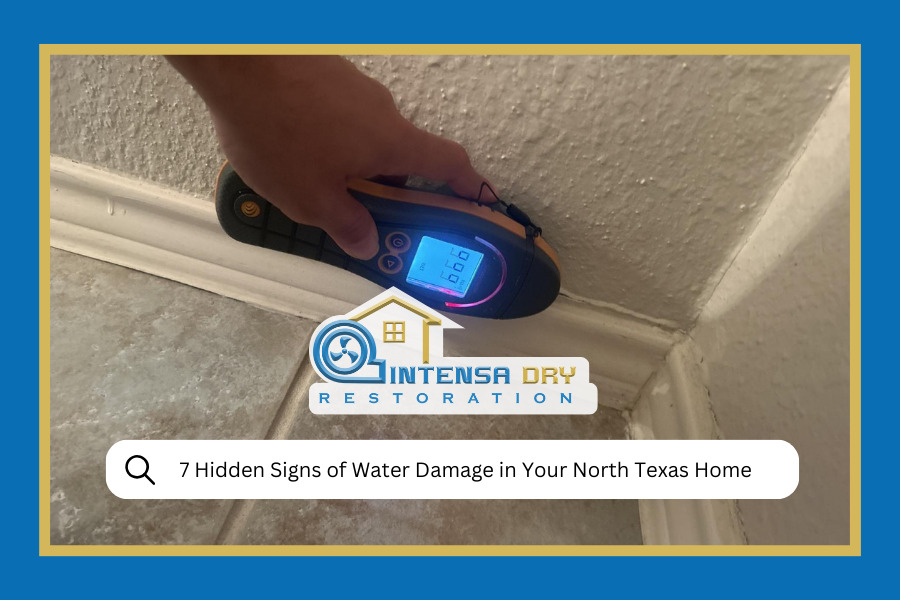
What you’re smelling is microbial growth. According to the EPA, mold can begin growing within 24-48 hours of water exposure. By the time you detect that smell, growth has likely been occurring for days. Our team uses moisture meters and thermal imaging to pinpoint sources behind walls.
Notice Something Off About Your Home?
Don’t wait for hidden water damage to become a major problem. Our certified technicians provide free moisture inspections across DFW with under 40-minute emergency response times.
2. Unexplained Discoloration and Stains
You might notice stains or discolored patches on walls, ceilings, or floors. Yellow or dark areas often appear around windows, plumbing lines, or baseboards. These stains indicate slow leaks that point to deeper water intrusion.
Ceiling stains are particularly concerning, indicating water has penetrated at least one floor level. This points to roof leaks, failing plumbing, or HVAC condensation.
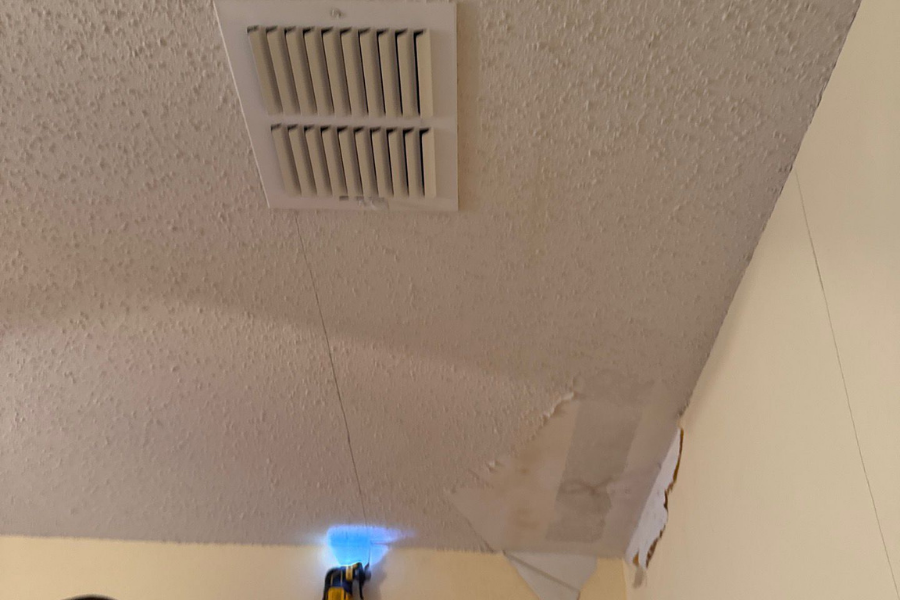
Water damage often reveals itself through paint failure before structural issues become visible
3. Peeling Paint and Bubbling Wallpaper
If paint or wallpaper starts to bubble, crack, or peel, consider it a serious warning. Moisture breaks the bond holding paint in place. Water vapor pushes outward, creating telltale bubbles.
Paint adhesive is water-soluble. Prolonged moisture dissolves the bond. If drywall feels soft or damp, you’re dealing with hidden damage. We often find mold growth behind affected areas.
4. Warped, Soft, or Buckling Floors
Your floors reveal moisture issues. Warped or buckling hardwood and laminate floors signal moisture trapped beneath.
Properly installed hardwood has 6-9% moisture content. When it absorbs water, this jumps to 15% or higher. Boards push against each other, creating cupping or buckling. Soft or spongy floors mean water is pooling below. We documented a Frisco water heater overflow that went unnoticed for weeks.
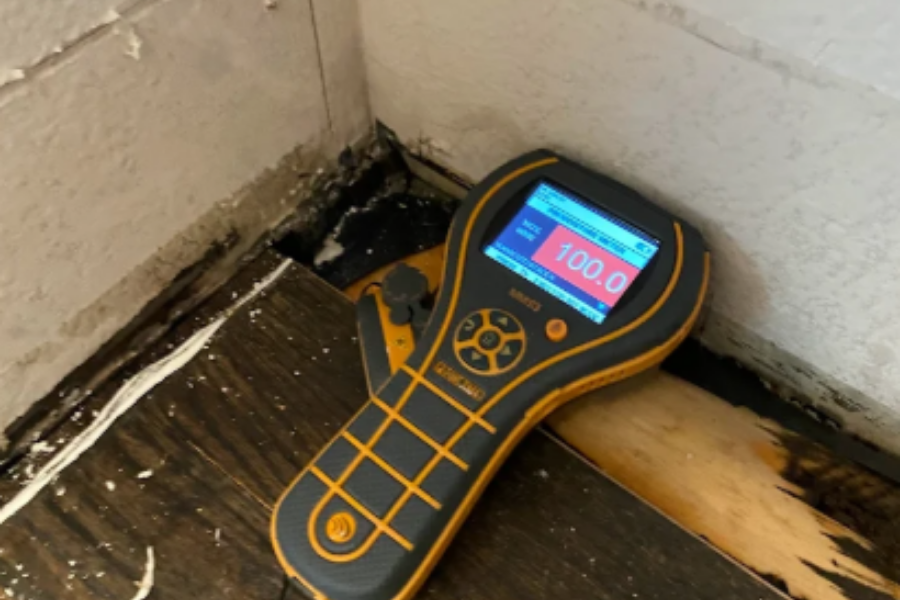
Flooring and wall damage often occur together, indicating significant moisture intrusion
How Professionals Detect Hidden Water Damage
| Detection Method | What It Finds | Best For |
|---|---|---|
| Moisture Meters | Exact moisture content | Confirming problem areas |
| Thermal Imaging | Temperature differences | Scanning large areas |
| Hygrometers | Ambient humidity | Tracking drying progress |
| Borescopes | Visual inside walls | Non-destructive investigation |
5. Rust or Corrosion on Non-Water Items
Look closely at metal components. Rust on pipes, fixtures, or nails in drywall signals excess humidity or hidden leaks. In properly maintained homes with 30-50% humidity, fixtures remain rust-free for years. Premature corrosion indicates sustained exposure above 60% humidity.
6. Increased Allergy or Respiratory Symptoms
If you or your family experience more allergy symptoms, coughing, or congestion in certain rooms, mold could be the cause. Mold develops within 24-48 hours after a leak and spreads quickly.
Mold releases spores continuously, triggering allergic reactions. Common symptoms include sneezing, watery eyes, and coughing. According to the Centers for Disease Control, people with mold allergies may have severe reactions.
If symptoms improve when you leave and worsen when you return, that indicates an air quality problem. Professional mold remediation addresses both visible growth and the moisture source.
Health Reminder:
If you suspect mold is affecting your health, consult with a healthcare provider. We can remediate the mold, but a medical professional should evaluate your symptoms.
7. Sudden Spikes in Water Bills or Humidity
A final clue is an unexpected spike in your water bill or indoor humidity. Most North Texas households use 3,000-12,000 gallons monthly. A sudden 10-15% increase typically indicates a leak. Indoor humidity consistently exceeding 60% despite air conditioning also suggests moisture infiltration. Compare your current bill to previous years.
Why Immediate Action is Critical in DFW
Early detection prevents serious and costly problems. In North Texas, homes sit on expansive clay soil that shifts with moisture. Long-term moisture exposure causes foundation cracks, weakened drywall, and structural damage.
The Dallas-Fort Worth metroplex experiences unique challenges. Our clay soil expands when wet and contracts when dry, putting stress on foundations. Temperature fluctuations between hot summers and winter freezes create ideal conditions for pipe failures. Our humid climate accelerates mold growth, making the first 48 hours critical.
What to Do When You Spot These Signs
- Stop the source if you can identify it.
- Document everything with photos for insurance.
- Remove standing water from floors.
- Increase ventilation with windows and fans.
- Contact professionals immediately. Damage worsens every hour.
Common mistakes homeowners make include waiting too long to call for help and attempting DIY structural repairs. Learn more about mistakes to avoid. These delays typically increase costs by 30-50%.
Get a Professional Moisture Inspection
At Intensa Dry Mold & Water Restoration, we offer free moisture inspections across DFW. We use thermal imaging and moisture meters to detect hidden problems. Our IICRC-certified technicians work directly with insurance providers to make the process smooth. Our average emergency response time is under 40 minutes across Plano, Frisco, McKinney, Allen, Lewisville, and Richardson.
24/7 Emergency Response Across North Texas
If you’ve noticed any warning signs of water damage in your North Texas home, or you simply want peace of mind, contact Intensa Dry Mold & Water Restoration today. We’re available 24/7 across Dallas-Fort Worth to help you protect your home from hidden leaks, mold, and water damage before it turns into a costly repair.
Call (972) 992-7331
Frequently Asked Questions
How quickly does mold grow after water damage in North Texas?
Mold begins growing within 24-48 hours after water exposure. Our humid climate accelerates this timeline. Within 72 hours, colonies become extensive enough to require professional remediation. Our team responds in under 40 minutes to begin drying before mold establishes itself.
Can I stay in my home during water damage restoration?
This depends on the extent of damage and location. Many restoration projects allow you to remain home, especially if damage is limited. However, if damage affects essential services or poses safety risks, temporary relocation may be necessary. We assess your situation and provide honest recommendations. Learn more about staying in your home during restoration.
Will my homeowners insurance cover hidden water damage?
Coverage depends on the cause and your specific policy. Most homeowners insurance covers sudden and accidental water damage, such as burst pipes or appliance failures. However, damage from long-term neglect or lack of maintenance is typically not covered. We work directly with insurance companies and can help you understand coverage and navigate claims.
What’s the difference between water damage mitigation and restoration?
Mitigation refers to immediate steps to prevent further damage, including extracting water and drying structures. This happens in the first 24-72 hours. Restoration involves repairing and rebuilding your home to its pre-loss condition. At Intensa Dry Mold & Water Restoration, we handle both phases. Read more about the complete restoration process.