Rapid Response Team
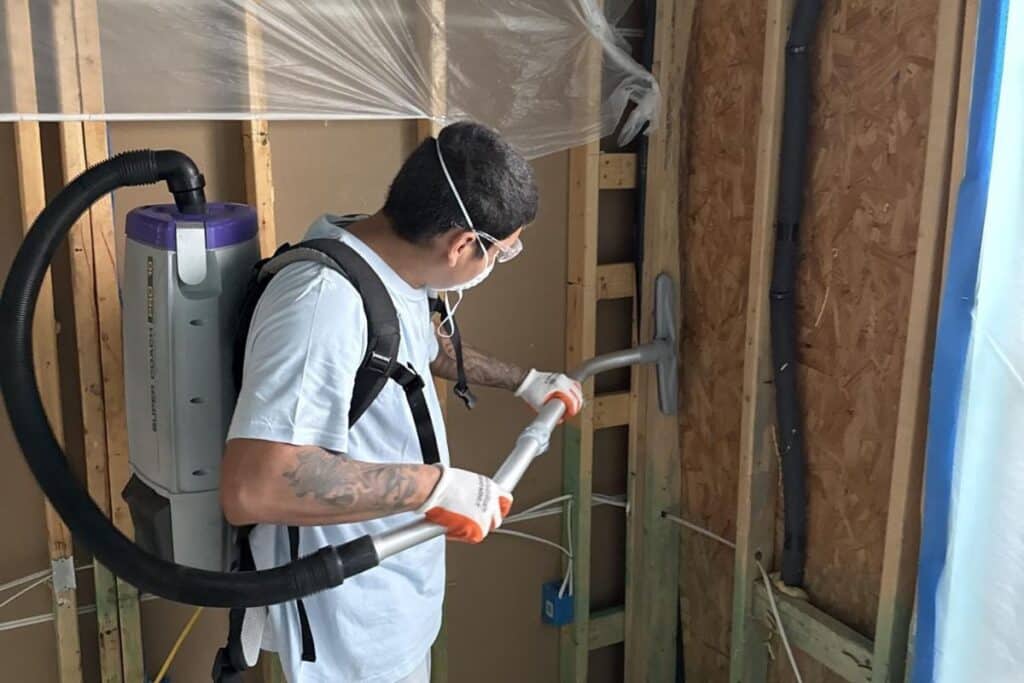
Most restoration companies dry what they can see. At Intensa Dry Mold & Water Restoration, we focus on what’s hiding behind the surface. Wall water damage repair demands more than drying the face of the drywall. It requires getting inside the wall cavity, where moisture collects around framing, insulation, and electrical components, and making sure every layer dries completely. Our IICRC-certified team brings thermal imaging, cavity drying systems, and over 20 years of combined experience to every wall damage project in the DFW MetroPlex.
Experienced & Professional
Locally Owned
Certified & Licensed
Free Estimate
Local. Certified. Ready.
Sometimes wall damage is obvious: a visible wet spot, a puddle at the base of a wall, or water actively running down the surface. Other times, the clues are subtler. Here’s what to watch for:
Each sign points to a different level of severity. Surface discoloration might indicate a minor, resolved leak. Soft drywall typically means active or recent moisture that has compromised the material.
Walls
Wall water damage that goes unaddressed doesn’t plateau. It escalates. Drywall absorbs moisture like a wick, pulling water higher and spreading it laterally into adjacent wall sections. Wet insulation loses its R-value and becomes a breeding ground for mold. Without proper wet insulation drying / removal, wooden studs and bottom plates exposed to prolonged moisture can develop rot.
The financial picture worsens with every day of delay. What starts as a targeted drying project can expand into full drywall replacement, insulation removal, mold remediation, and structural repair. Insurance adjusters also look at response time when evaluating claims. Quick professional intervention, combined with thorough documentation, gives your claim the strongest footing.
Our Process
Detection and Assessment → We use thermal imaging and moisture meters to map the full extent of wall moisture. This tells us which walls are affected, how deep the moisture has penetrated, and whether the insulation and framing behind the drywall are compromised.
Water Extraction and Source Resolution → Standing water is extracted and the source identified. For hidden leaks, we coordinate leak detection services to pinpoint the origin behind walls, under slabs, or within the plumbing system.
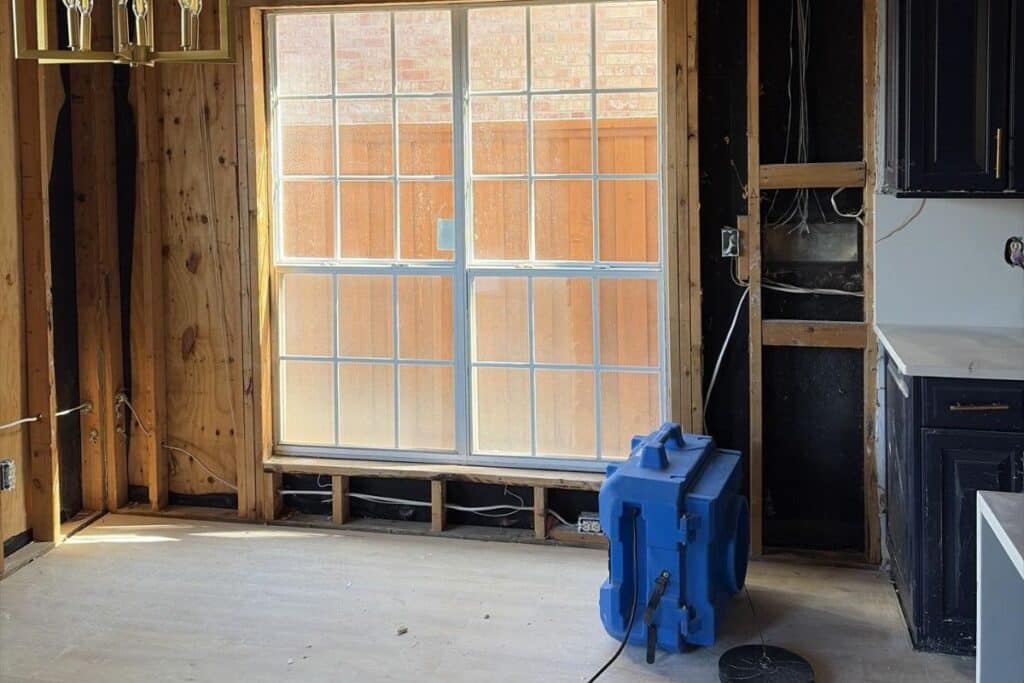
Cavity Drying → This is where our process differs from surface-only approaches. We inject warm, dry air directly into wall cavities through small access points. Dehumidifiers pull moisture from the ambient air while cavity drying systems target the deeper layers. Moisture meters confirm when every layer, from the drywall face through the insulation and framing, has returned to acceptable levels.
Material Replacement and Restoration → Drywall sections that can’t be saved are removed and replaced. Wet insulation is pulled and new material installed. We prep surfaces for finishing and can coordinate full reconstruction and repair when structural components are involved.
Get in Touch
With IICRC-certified technicians, 24/7 emergency availability, and an average response time under 40 minutes, Intensa Dry Mold & Water Restoration has the tools and the training to handle wall water damage repair at every scale. From a single section of wet drywall to multi-room water intrusion, we’ve seen it all across Plano, Frisco, McKinney, Allen, Richardson, and the greater DFW area. Call us for a free consultation.
Get your free estimate today!
FAQ
This site uses cookies and tracking technologies including Google Tag Manager, Google Maps, and YouTube. You can accept, reject non-essential tracking, or manage your preferences.
Get your free estimate today!