Rapid Response Team
Ceiling water damage repair isn’t about slapping a coat of paint over a brown stain. A discolored or sagging ceiling is a warning sign that moisture is active above the drywall, whether from a roof leak, a burst pipe in the attic, an HVAC condensation problem, or an upstairs bathroom overflow. At Intensa Dry Mold & Water Restoration, our IICRC-certified technicians trace the moisture back to its origin, dry the affected structure, and restore your ceiling water damage to its pre-loss condition. We serve homeowners and businesses across the Dallas-Fort Worth MetroPlex 24/7.
Experienced & Professional
Locally Owned
Certified & Licensed
Free Estimate
Local. Certified. Ready.
Water reaches your ceiling from multiple directions:
The danger with ceiling leaks is that water travels along framing members and insulation before it becomes visible. The stain you see on your ceiling may be several feet from the actual source.
Ceiling
Wet ceilings create more than cosmetic problems. Saturated drywall and insulation above your head become ideal environments for mold colonization. Because warm air rises, ceiling cavities stay warm, and when moisture is present, mold can establish quickly in these spaces.
According to the EPA’s guide on mold and moisture, mold can begin growing on damp surfaces within 24 to 48 hours. In ceiling assemblies, that growth happens out of sight behind drywall, on the backside of insulation, and along wooden joists. Occupants may not see the mold, but they can experience its effects: respiratory irritation, persistent allergy symptoms, and musty odors that don’t go away. Professional water damage restoration and ceiling leak restoration include moisture verification in these hidden spaces, not just the visible surface.
Our Process
Inspection and Source Identification Our technicians start by locating the water source, not the stain. Using moisture meters and thermal imaging, we trace the moisture path through the ceiling assembly to identify exactly where water is entering. You’ll understand the full picture before any work begins.
Controlled Drying Ceiling drying requires careful technique. We position air movers and dehumidifiers to target the affected area from both above and below when accessible. In some cases, small strategic openings allow airflow into the ceiling cavity without removing entire sections of drywall. We monitor moisture levels daily until readings confirm the structure is fully dry.
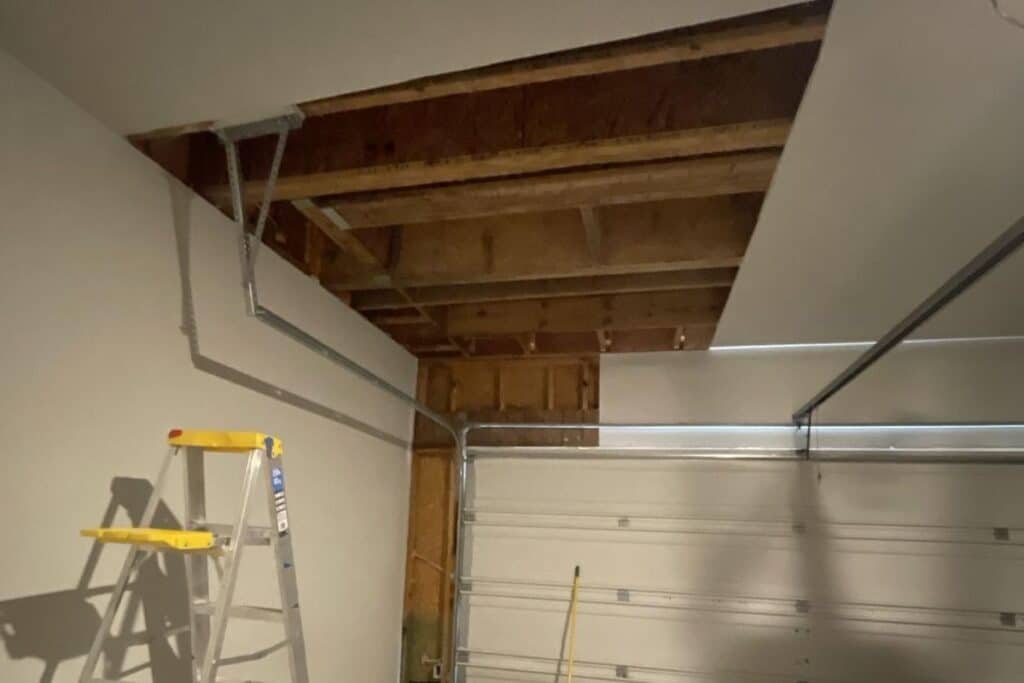
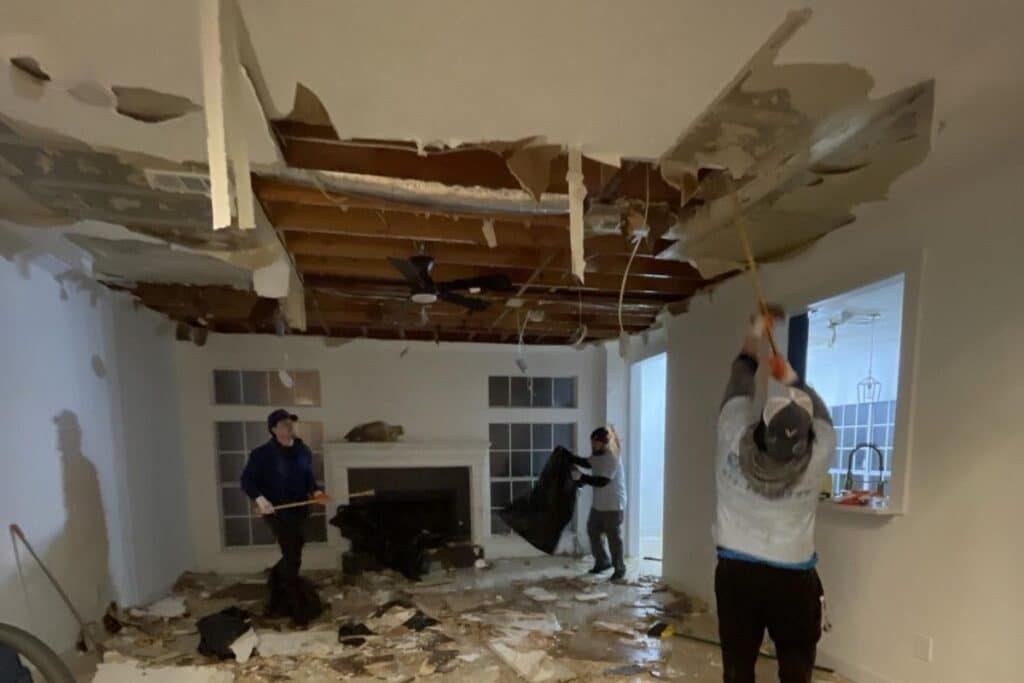
Damaged Material Removal Ceiling drywall that has sagged, crumbled, or shows active mold contamination must be removed. We contain the work area to prevent debris and potential mold spores from spreading to other rooms. Wet insulation above the ceiling is also removed and replaced.
Restoration and Finishing Once the structure is dry and clean, we replace drywall sections, retape seams, and prepare surfaces for finishing. If water stain on ceiling repair is the only need, we treat the stain to prevent bleed-through and prepare the surface for paint.
Get in Touch
You don’t have to figure out where the water is coming from on your own. From the initial inspection through the final coat of texture, our team handles every phase of ceiling water damage repair. We coordinate with roofers, plumbers, and HVAC technicians when the source falls outside our scope, and we work directly with your insurance company to document the damage and support your claim. Call Intensa Dry Mold & Water Restoration or fill out our contact form for a free consultation.
Get your free estimate today!
FAQ
This site uses cookies and tracking technologies including Google Tag Manager, Google Maps, and YouTube. You can accept, reject non-essential tracking, or manage your preferences.
Get your free estimate today!