Jump To:
- What Causes Water Damage to Hardwood Floors?
- Common Signs of Water Damage in Hardwood Floors
- How Water Damage Affects Hardwood Floors Over Time
- How to Prevent Water Damage to Hardwood Floors in Plano
- Repair Options for Water-Damaged Hardwood Floors
- Why Professional Help Makes the Difference
- How Humidity Affects Hardwood Floors in Plano
- Does Insurance Cover Water Damage to Hardwood Floors?
- Frequently Asked Questions
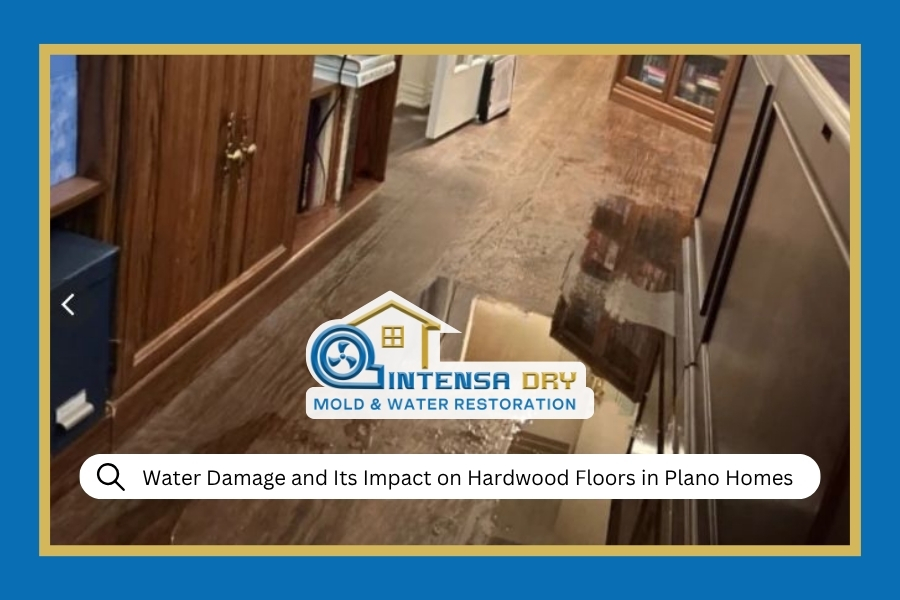
Water damage is one of the fastest ways to ruin a beautiful hardwood floor, and Plano homes see plenty of it thanks to our humidity swings and sudden storms. Hardwood is prized for its durability and looks, but moisture undercuts all of that in a hurry. At Intensa Dry Mold & Water Restoration, we handle professional water damage restoration across the DFW MetroPlex, and we see the same story again and again. A small leak nobody noticed turns into warped boards, dark stains, and sometimes mold underneath. Here is what causes it, how to spot it early, and what your real options are.
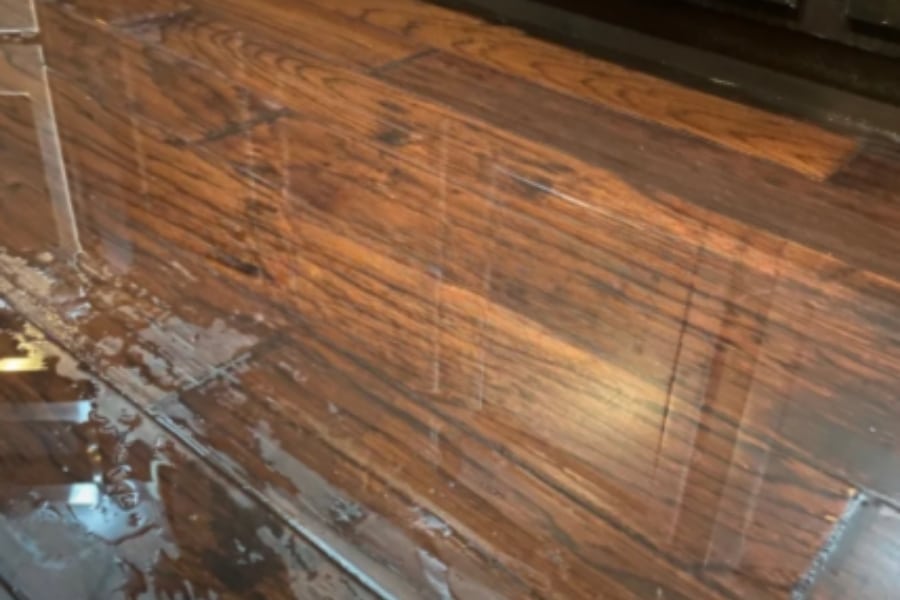
Standing water on a wood floor is a race against the clock. The longer it sits, the deeper the damage goes.
What Causes Water Damage to Hardwood Floors?
Water damage on hardwood comes from spills, plumbing leaks, high humidity, and flooding. In Plano, summer storms drop sudden rain that seeps into homes and reaches floorboards. Small problems add up fast when moisture has nowhere to go.
The usual culprits we run into include:
- Spills that sit too long, from water bottles to pet accidents
- Burst pipes, leaky appliances, and slow supply-line drips
- Poor ventilation in kitchens and bathrooms that traps moisture
- Roof and window leaks after heavy North Texas rain
- Flooding that soaks boards almost instantly
Plumbing is a frequent offender because the water often hides before it shows. Catching it early with leak detection can save an entire floor. If you have spotted damp spots you cannot explain, the hidden signs of water damage are worth a closer look.
Common Signs of Water Damage in Hardwood Floors
Early detection keeps repair costs down. The clearest signs are boards that warp, lift, or separate, along with dark spots and a musty smell. Two shapes tell the story fast: cupping, where the edges rise above the center, and crowning, where the center rises above the edges.
Walk your floor and check for these:
Hardwood Water Damage Checklist
- ☐ Warping, buckling, or boards pulling apart
- ☐ Dark spots, stains, or discoloration
- ☐ Cupping (edges high) or crowning (center high)
- ☐ A musty or damp odor near the floor
- ☐ Creaking or a soft, spongy feel underfoot
Any one of these means moisture has gotten in. The sooner you act, the better your odds of saving the wood instead of replacing it.
Not sure how deep the damage goes?
Our team measures hidden moisture and gives you straight answers, no pressure. Free inspections across Plano and the MetroPlex.
How Water Damage Affects Hardwood Floors Over Time
Water weakens hardwood by swelling its fibers, warping boards, and creeping into the subfloor below. Left alone, that moisture invites rot and mold, and it can even affect the joists holding your floor up. What starts as a cosmetic issue can quietly turn into a structural one, which is exactly why we tell Plano homeowners not to wait and see.
The damage tends to move through two stages, and knowing the difference helps you act before it gets expensive.
| Short-Term Effects | Long-Term Effects |
|---|---|
| Surface warping and staining | Rot in boards and subfloor |
| Minor gaps between boards | Mold growth and poor air quality |
| A slight spongy feel | Floor instability and full replacement |
Mold is the part people underestimate. Trapped moisture gives spores everything they need, which is why the EPA recommends drying wet materials within 24 to 48 hours to keep it from taking hold.
How to Prevent Water Damage to Hardwood Floors in Plano
Prevention comes down to controlling moisture before it reaches the wood. In a humid, storm-prone area like Plano, a few simple habits protect your investment year round.
Build these into your routine:
- Check under sinks, around appliances, and in bathrooms for leaks
- Wipe up spills right away instead of letting them soak in
- Run a dehumidifier during humid months
- Seal floors with a waterproof finish for extra protection
- Keep windows and doors weathertight so outdoor moisture stays out
None of this is complicated, and it beats the alternative. A little attention now saves you a big repair bill later.
Repair Options for Water-Damaged Hardwood Floors
Repairs depend on how far the water traveled. Minor moisture often dries out with fans and a dehumidifier, and light warping can be sanded and refinished. Deeper damage means replacing boards or, when the subfloor is compromised, rebuilding the floor.
Here is a quick way to gauge where you stand:
| Often DIY-Friendly | Call a Professional |
|---|---|
| Small, fresh spill on sealed wood | Standing water or a large area |
| Light surface warping | Cupping, crowning, or buckling |
| A quick dry and buff | Any musty smell or suspected mold |
When the subfloor is soaked, patching the surface will not cut it. That is where floor replacement and reconstruction comes in. For a walk-through of the process, our guide on repairing a water-damaged hardwood floor lays it out step by step.
Why Professional Help Makes the Difference
Professionals find moisture you cannot see and stop damage you would otherwise miss. Certified technicians use meters and thermal imaging to trace water into the subfloor, then dry it to a verified standard instead of guessing.
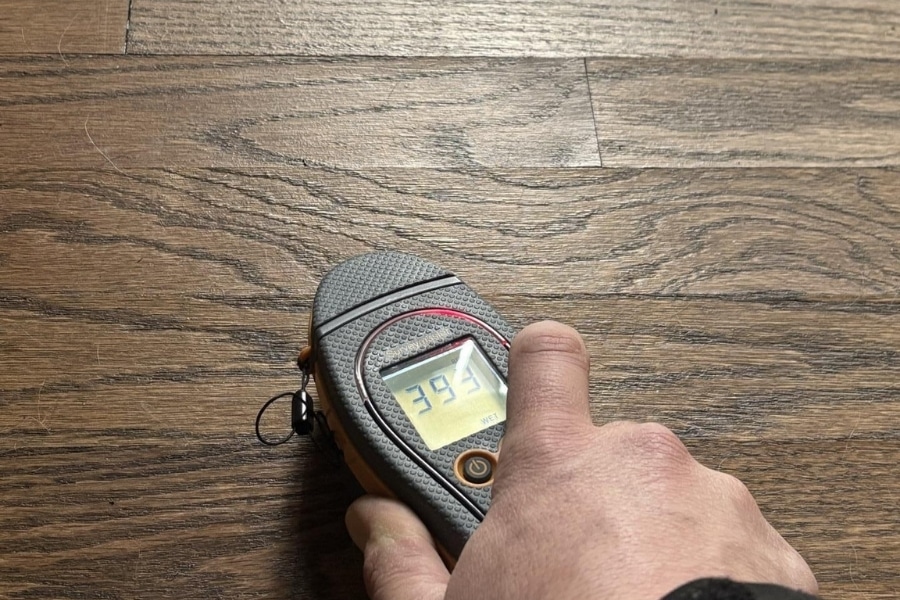
A moisture meter shows what your eyes cannot. Hidden dampness under the boards is what drives long-term damage.
DIY drying often leaves moisture trapped below the surface, and that is what leads to mold and repeat repairs down the road. Our crews follow the IICRC S500 water damage standard, so the floor is truly dry before anyone calls it finished. Ready when you are? Learn about our water damage cleanup process or reach out for a look.
How Humidity Affects Hardwood Floors in Plano
Humidity quietly shapes the health of your floors all year. When indoor air is too damp, wood absorbs moisture and expands, which leads to warping. When it is too dry, wood contracts and gaps open between boards.
The Hardwood Humidity Sweet Spot
Keep indoor humidity around 30 to 50 percent. Too high and boards swell. Too low and they shrink and gap.
A dehumidifier in summer and a humidifier in the dry winter months keep things steady through Plano’s seasonal swings. The EPA suggests keeping indoor humidity below 60 percent, ideally in that 30 to 50 percent range, which also keeps mold in check.
Does Insurance Cover Water Damage to Hardwood Floors?
Most homeowner’s policies cover sudden, accidental water damage, like a burst pipe or an appliance leak. Coverage usually does not extend to slow leaks or damage from deferred maintenance, and flooding typically needs a separate flood policy.
Before you file, review your policy and document everything with photos of the damage and the source. Save receipts for any emergency work, like renting fans to slow the spread. We handle insurance claims every day and can help you sort out what is covered so you are not stuck guessing. When in doubt, a quick call to your agent clears up the gray areas, and knowing your coverage before disaster strikes saves a lot of stress later.
Frequently Asked Questions
How can I tell if my hardwood floors have water damage?
Look for warping, buckling, dark spots, or a musty odor. Cupping, crowning, and uneven surfaces are also strong signs that moisture has gotten into the wood.
Can water-damaged hardwood floors be saved?
Often, yes, especially if you act fast. Minor damage may only need drying and refinishing, while boards that have cupped or buckled usually need replacement.
How quickly do I need to act after water hits my floor?
As fast as possible. Drying wet materials within 24 to 48 hours gives you the best shot at saving the wood and heading off mold before it starts.
Does homeowner’s insurance cover it?
It depends on the cause. Sudden events like a burst pipe are usually covered, but gradual leaks and flooding often are not without specific coverage.
Water damage does not have to mean losing your floors. Catch it early, control your humidity, and bring in a pro when the damage runs deep. If you are in Plano or nearby McKinney and something feels off underfoot, our team at Intensa Dry Mold & Water Restoration is ready to help you dry it out and get your home back.