
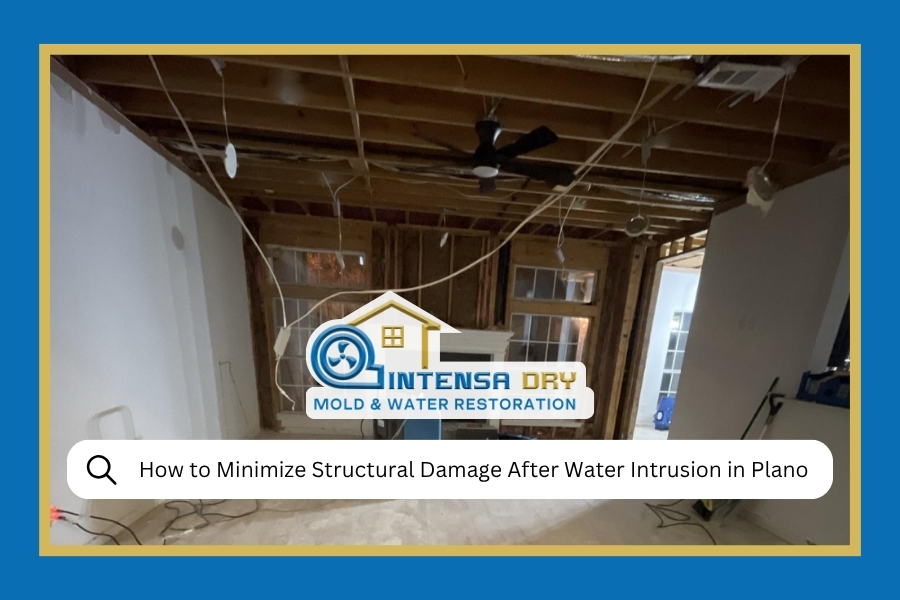
Water intrusion moves fast in a Plano home. One heavy storm or one burst pipe, and your drywall, floors, and framing start soaking it up within hours. Move quickly, dry things out right, and you can keep a small mess from turning into major structural damage. Our team at Intensa Dry Mold & Water Restoration handles water damage restoration in Plano all year, and the homes that bounce back best are the ones where someone acted early.
Why does water intrusion threaten your home’s structure?
Water quietly weakens the very materials that hold your home up. Wet wood swells and rots. Drywall crumbles. Subfloors warp, and metal fasteners rust.
Left alone, that trapped moisture also feeds mold within 24 to 48 hours. So fast drying, not just mopping up, is what saves the structure.
Here in the DFW area, we see it after spring storms, roof leaks, and the odd January freeze that cracks a pipe. Our IICRC-certified techs follow the S500 standard, the industry rulebook for drying a building the right way. Catching trouble early changes everything. If you want the warning signs, we laid them out in our guide on spotting water damage early.
We’re a family-owned crew with more than twenty years of combined experience across the team. That local knowledge matters. North Texas clay soil swells and shrinks with every wet and dry spell, and it already puts steady stress on slabs and foundations before water damage ever enters the picture.
How do you stop the water before it spreads through your home?
Find the source and shut it off first. A busted supply line means the main water valve. A roof leak means a tarp. Nothing you dry will stay dry until the water stops coming in.
Some leaks hide behind walls or under the slab, and those are the sneaky ones. A slow drip can rot framing for months before anyone notices a thing. If you can’t tell where it’s coming from, our leak detection team in Plano can pinpoint it without tearing your house apart.
Speed is everything in that first hour. Even a fast response keeps water from wicking up into wall studs, where it’s much harder to reach. That’s why our average emergency response time runs under forty minutes across the DFW MetroPlex.
- Shut off the water at the source or main valve.
- Cut power to wet areas if you can do it safely.
- Get people and pets away from standing water.
- Move furniture, rugs, and valuables to dry ground.
- Snap photos and video for your insurance claim.
- Call a restoration pro to start drying fast.
What’s the right way to dry it out?
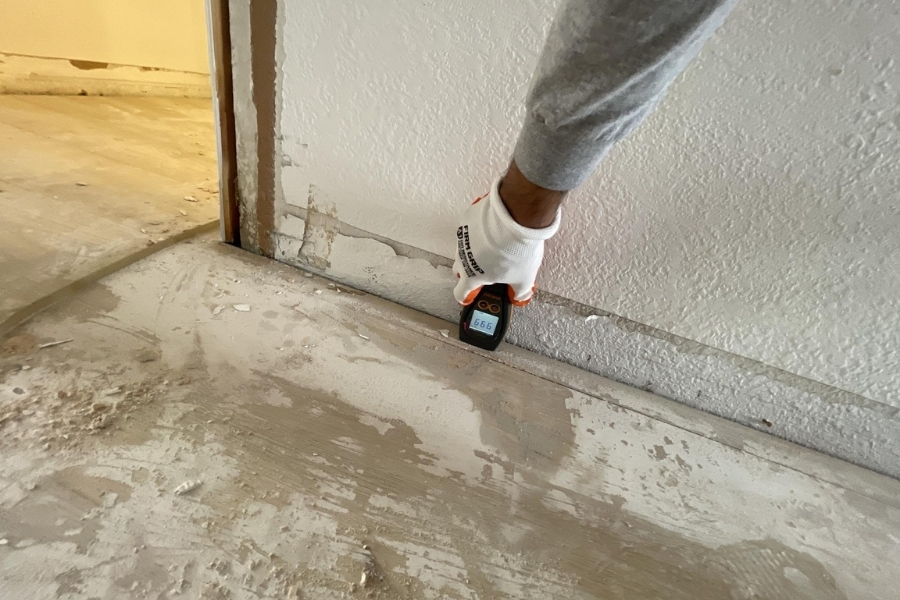
Dry everything within 24 to 48 hours. That’s your window before mold takes hold. Fans and open windows help a little, but real drying needs commercial air movers and dehumidifiers that pull water out of walls and subfloor.
The EPA backs this up: drying water-damaged areas within 24 to 48 hours is the key to stopping mold. Surface-dry is not the same as dry. Water hides in insulation, wall cavities, and under flooring, and a moisture meter is the only way to know for sure.
Airflow matters as much as heat. We set air movers to push a steady current across wet surfaces while dehumidifiers pull the moisture out of the room. Skip that pairing, and the top layer dries while the core stays soaked.
Some things just have to go. Soaked carpet pad, swollen baseboards, and sagging drywall trap water and drag out the whole job. Removing them lets the framing dry and keeps mold from moving in. For more on that, see how to prevent mold after water damage.
0 to 24 hrs Water spreads into drywall, floors, and framing. Best time to act. | 24 to 48 hrs Mold spores start to grow. Materials weaken. Drying gets harder. | 48 hrs + Mold colonies set in. Rot and structural damage climb quickly. |
How do you protect the foundation and framing?
Keep water moving away from the house. Good grading, clean gutters, and working downspouts stop water from pooling at the foundation. Around the slab, standing water is what leads to cracks and settling over time.
Your yard should slope away from the house, not toward it. Gutters that dump water six feet out beat ones that spill right at the wall. After a big Plano storm, a quick walk around the foundation can catch pooling before it does real harm.
Clean your gutters at least twice a year, and more often if you have big trees nearby. Clogged gutters send water straight down your exterior walls. On our clay soil, that’s a fast track to foundation trouble.
Roofs are a top entry point, so check yours after hail and high wind. Fix loose shingles and worn flashing before the next storm finds them. And if a door suddenly sticks or a new crack shows up in a wall, that can hint at shifting worth a closer look.
| You can usually handle | Call a professional for |
| A clean spill on tile or vinyl | Water that reached drywall or insulation |
| A small area under 10 square feet | Standing water that sat over a day |
| Wiping up right after a fresh leak | Sewage or other contaminated water |
What about building back stronger?
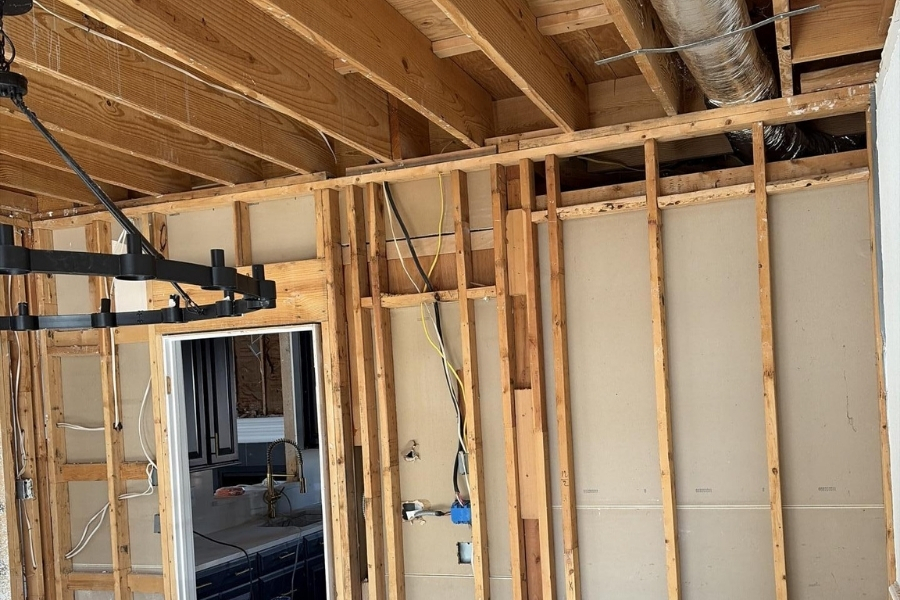
When you repair, pick materials that shrug off water. Treated lumber, moisture-resistant drywall, and good sealants around windows and doors give you a tougher home for next time. It costs a little more up front and saves a lot later.
Match your repairs to the water risk in each room. Bathrooms and laundry rooms take the most abuse, so that’s where moisture-resistant drywall and sealed seams really earn their keep.
Sealant is cheap insurance. Reseal windows, doors, and gaps in exterior walls every so often, and you close off the easy paths water uses to sneak in. A ten dollar tube beats a torn-out wall.
If water already chewed through drywall, flooring, or framing, rebuilding is its own job. We handle the repairs after the drying is done, so you’re not juggling five different contractors.
When should you call a professional?
Call a pro when water sat more than a day, touched drywall or insulation, or came from a dirty source like sewage. Those jobs need drying equipment and training most homeowners don’t keep in the garage.
A small clean spill on tile? You’ve got that. But hidden moisture and contaminated water are where things go sideways fast. Crews who follow the IICRC S500 standard know how to dry a structure so it truly stays dry, not just dry to the touch.
We’ll always give you a straight answer about what needs a pro and what you can handle yourself. Free inspections mean you’re never guessing, and our crews stay on call around the clock.
Want to see what a full recovery looks like? Check out a Plano reconstruction case study where a home came back after heavy water damage. When you’re not sure how bad yours is, a free inspection settles it fast and costs you nothing.
Frequently asked questions
How fast does water cause structural damage in a Plano home?
Materials start absorbing water within hours, and mold can begin growing in 24 to 48 hours. The sooner you stop the source and start drying, the less damage your framing, floors, and drywall take on.
Can I dry out water damage myself?
Small, clean spills on hard surfaces are fine to handle yourself. Once water reaches drywall, insulation, or subfloor, or sits for more than a day, you’ll want a pro with commercial drying gear and a moisture meter.
Does homeowners insurance cover structural repairs after water damage?
Sudden, accidental damage like a burst pipe is often covered, while slow leaks and neglect usually are not. Document everything with photos before cleanup, and our team can help you work through the claim.
What signs mean water hurt my home’s structure?
Watch for sagging ceilings, soft or warped floors, doors that suddenly stick, fresh cracks in walls, and a musty smell that won’t quit. Any of these is worth a professional look before it spreads.