Water damage insurance claims are no longer just a homeowner headache. They’ve become a systemic economic problem. Here in the Dallas-Fort Worth area, we respond to water losses every week, and one thing we see constantly is how preventable most of them are. As an IICRC-certified team providing professional water damage restoration in Plano, TX, we’re close enough to this issue to have an opinion on why insurance premiums keep climbing, and what actually needs to change at a national level.
This isn’t a contractor pitch. It’s a look at a real infrastructure problem that touches every homeowner’s wallet.
Had a water loss recently? Act before your premium does.
A fast, professional response limits damage and strengthens your claim documentation. Our team is available 24/7 with an average response time under 40 minutes.
Why Interior Water Claims Are Rising
Interior water losses, meaning damage that originates inside the home rather than from weather, have been climbing for years. The Insurance Information Institute has tracked water damage as one of the top causes of homeowners claims for over a decade, and the trajectory hasn’t reversed.
Several factors are driving this. Homes are getting larger. Plumbing systems in older stock are aging out. Appliances have more water connections than ever before, including ice makers, dishwashers, and whole-home filtration systems. And Americans are spending more time traveling, leaving properties unattended when small leaks can quietly become big ones.
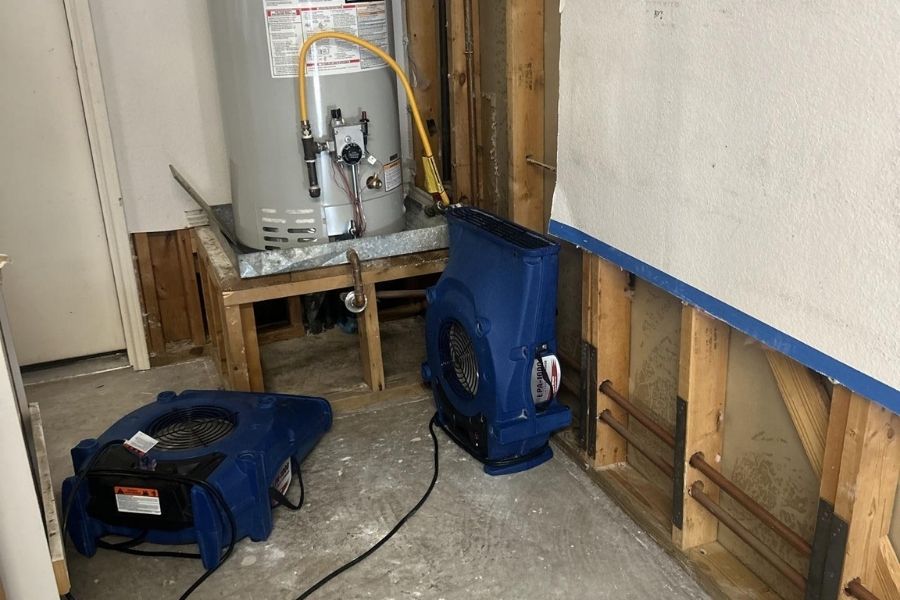
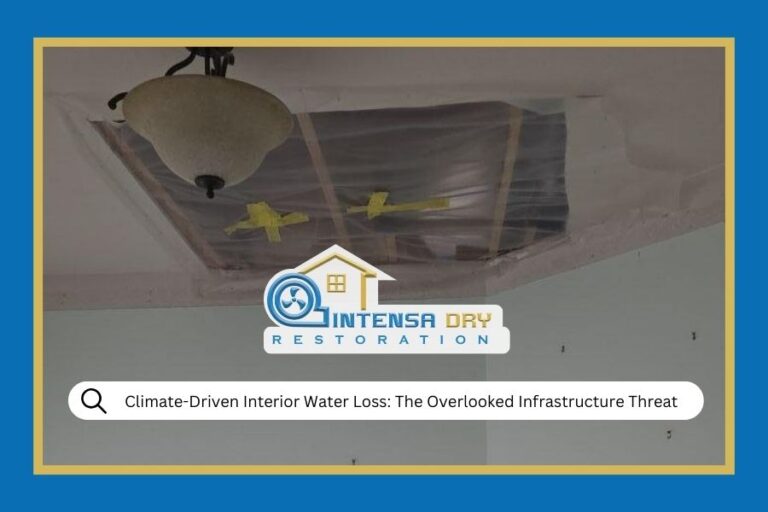
Water heater failures are among the most common non-weather interior water losses, and often go undetected for days.
The result is a steady, compounding claim volume that insurance actuaries can’t easily price around. And when carriers can’t price risk accurately, they spread it across everyone’s premiums.
What Are Non-Weather Water Losses?
Non-weather water losses are any interior water damage events not caused by storms, flooding, or acts of nature. They’re the slow, unglamorous leaks that don’t make the news but collectively cost the industry billions each year.
The Most Common Sources
- Burst or aging supply line pipes
- Water heater failures and slow pan leaks
- Washing machine hose ruptures
- Refrigerator ice maker line failures
- Dishwasher seal degradation
- Toilet flange and wax ring failures
- Slow roof leaks that reach interior walls
- HVAC condensate drain overflows
None of these are dramatic. All of them are expensive. And a surprising number repeat at the same address, which is the part that really strains the insurance system.
Interior Water Loss: Risk by Source
| Loss Source | Avg. Detection Delay | Typical Damage Category | Repeat Claim Risk |
|---|---|---|---|
| Water heater failure | Hours to days | Category 1-2 | Moderate |
| Supply line burst | Minutes to hours | Category 1-3 | Low (single event) |
| Appliance slow leak | Days to weeks | Category 2 | High |
| HVAC condensate overflow | Days to months | Category 1-2 | Very high |
| Roof/window slow leak | Weeks to seasons | Category 2-3 | High |
How Repetitive Claims Strain Insurance Carriers
One claim is a data point. A second claim at the same property is a pattern. Repetitive losses, defined in the industry as multiple claims at the same location within a short period, are especially damaging to how insurers model risk and price coverage.
According to the Insurance Information Institute, water damage and freezing are consistently among the top two causes of homeowners insurance losses by frequency. Unlike fire or wind, water losses tend to be smaller per event but happen far more often. That pattern creates a math problem for carriers: they can’t easily justify sharp premium hikes after a single moderate claim, but the aggregate cost is still eroding their loss ratios.
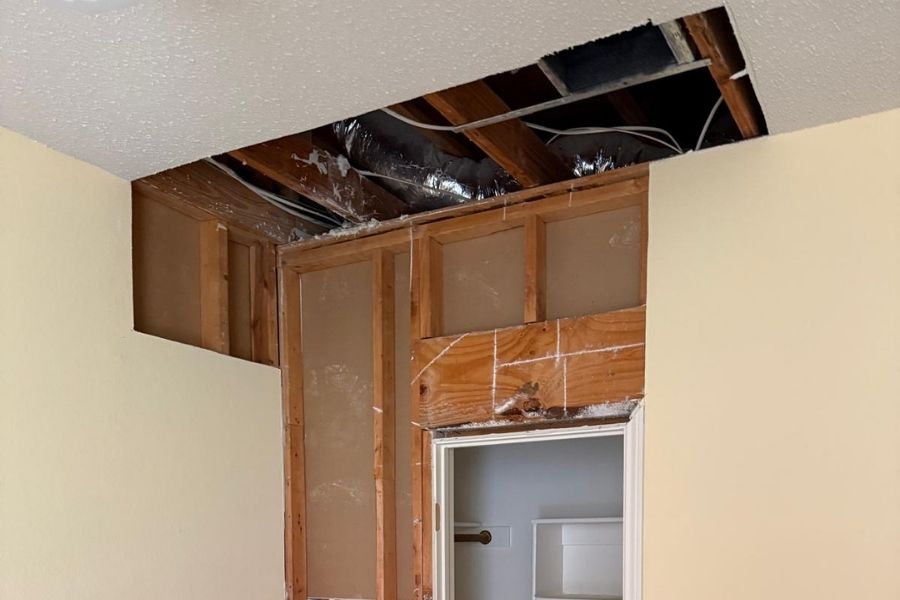
Plumbing failures inside finished walls often go undetected until the damage is already significant, driving up both claim severity and mitigation costs.
The response from carriers has been predictable. Non-renewal in high-frequency markets. Coverage exclusions for slow leaks and gradual damage. Deductible increases tied specifically to water events. And across-the-board premium adjustments that hit every policyholder, regardless of individual claim history.
The homeowner who’s never filed a water claim is still subsidizing the systemic inefficiency. That’s the part of this conversation that doesn’t get enough attention.
The Case for Prevention Infrastructure
Prevention infrastructure is any system, technology, or practice that reduces the frequency or severity of water loss events before they generate a claim. The insurance industry has quietly been moving in this direction, but progress is slow and uneven.
What Prevention Infrastructure Actually Looks Like
- Automatic leak detection systems that shut off water supply when moisture is sensed
- Smart water meters that flag unusual usage patterns to homeowners in real time
- Proactive appliance replacement schedules tied to manufacturer failure rates
- Annual plumbing inspections that identify at-risk fittings and connections
- Proper structural drying after any water event, which eliminates latent moisture that would otherwise cause secondary damage and future claims
That last point matters to us directly. When a water loss isn’t properly mitigated, the structural moisture left behind creates conditions for mold growth, material degradation, and eventual secondary claims. A home that gets a thorough professional dry-out the first time is far less likely to generate a follow-up claim. Understanding the four phases of professional water damage restoration makes it clear why cutting corners early costs everyone more later.
Some carriers are already offering premium discounts for installed leak detection devices. It’s a good start. But individual incentives only go so far without systemic adoption.
Worried about hidden moisture in your home?
Undetected water intrusion is one of the most common precursors to repeat insurance claims. Our team uses thermal imaging and professional moisture detection to find what you can’t see.
The Shift Toward a Mitigation-First Model
For a long time, the restoration industry operated in reactive mode. Something broke. Someone called. We fixed it. That model still works at the individual job level, but it doesn’t address the upstream problem.
A mitigation-first model flips that. It prioritizes reducing loss severity and frequency through early intervention, better documentation, and proper initial response. The IICRC, which sets the professional standards our team is certified under, has long advocated for rapid response and thorough drying as the foundation of effective restoration. The reason is simple: a job that gets done right the first time doesn’t come back.
For insurance carriers, a mitigation-first approach also means better claim data. Thorough documentation, moisture readings, and drying logs give adjusters what they need to settle claims accurately, which reduces disputes, litigation, and inflated payouts. That documentation also creates a record that demonstrates when a loss was properly remediated, which can be critical if secondary damage shows up later. You can read more about how professional mitigation services protect both homeowners and insurers in Plano and across the DFW area.
The industry is moving this direction, but it’s moving slowly. And the gap between where standards are and where practice actually lands in the field is a real problem.
The Standardization Gap Nobody Talks About
This is the part of the insurance premium conversation that almost nobody brings up. There’s a significant gap between what restoration standards say should happen and what actually happens on many jobs.
The IICRC S500 Standard, the industry’s authoritative guide for water damage restoration, specifies procedures for moisture assessment, equipment placement, drying goals, and documentation. But there’s no universal enforcement mechanism. Any company can respond to a water loss and claim they’ve mitigated it. Whether they actually followed professional drying standards is another question entirely.
That inconsistency has real downstream effects. Jobs that aren’t dried to standard create latent moisture problems. Latent moisture becomes secondary damage. Secondary damage becomes another claim. And the cycle continues.
According to the EPA’s guidance on mold prevention, materials that remain wet for more than 24 to 48 hours are at significant risk for mold colonization. Proper drying isn’t just about removing visible water. It’s about eliminating the conditions that make secondary losses possible. That’s a scientific standard, not a contractor preference.
Closing the standardization gap would require broader industry coordination, insurance carrier mandates for certified contractors, and better verification systems for completed work. None of that is simple. But the data on water damage costs suggests the status quo is unsustainable.
What Proper Standardization Would Include
- Mandatory IICRC certification for contractors working on insurance-covered losses
- Standardized drying documentation submitted with every claim
- Clear scope definitions that distinguish mitigation from full restoration
- Carrier-level verification processes for completed drying work
- Incentive structures rewarding early intervention and proper close-out
Some of these already exist in pockets of the industry. None of them are universal. Until they are, homeowners everywhere, including here in Plano and across DFW, will keep absorbing premium increases that a better system could prevent.
We talk about this stuff a lot with our clients, because we think it matters. If you want to understand what goes into a properly documented restoration job, our team is happy to walk you through it. Just reach out to our team and we’ll answer your questions.
Frequently Asked Questions
Why are interior water losses more damaging to insurance premiums than storm events?
Interior water losses happen far more frequently than major storm events, which makes them a higher-frequency cost for carriers even when individual claims are smaller. Repetitive non-weather losses at the same property are especially problematic because they signal ongoing systemic risk that carriers can’t easily price or mitigate without addressing the underlying cause.
Does a properly documented restoration job actually affect future insurance premiums?
Proper documentation demonstrates that a loss was fully remediated, which can reduce the likelihood of secondary claims tied to the same event. Carriers and adjusters look favorably on thorough drying records and signed certificates of completion. It doesn’t guarantee lower premiums, but it removes ammunition for a future denial if additional damage surfaces later.
What is the IICRC S500 and why does it matter for homeowners?
The IICRC S500 is the industry-recognized standard for water damage restoration. It defines acceptable drying protocols, moisture measurement requirements, and documentation procedures. For homeowners, hiring a contractor certified to this standard means your home is being restored to a measurable professional benchmark, not just dried until it looks dry.
Can prevention technology really reduce insurance premiums for individual homeowners?
Some carriers already offer discounts for installed leak detection and automatic shutoff systems. The discount varies by carrier and policy, but the principle is straightforward: homes with active prevention infrastructure generate fewer claims. Ask your carrier specifically what mitigation devices they recognize for premium adjustments.