Jump To:
When water damage strikes your Plano home, one of the first questions that pops into your head is probably “Do I need to pack up and leave?” It’s completely natural to want to stay in familiar surroundings during such a stressful time. The answer isn’t always black and white, though. Whether you can stay depends on several factors, and our team at Intensa Dry Restoration has helped countless DFW families navigate this exact situation with professional water damage restoration in Plano TX.
Let’s walk through what you need to know about staying put versus temporary relocation during water damage restoration.
Safety Comes First: When You Should Leave
Before we dive into the “maybe” scenarios, let’s cover the situations where staying home simply isn’t an option. Your safety and your family’s wellbeing always come first.
Contaminated Water Situations
If you’re dealing with sewage backups or septic system failures, you’ll need to find alternative accommodations. Category 3 water damage (the technical term for heavily contaminated water) poses serious health risks. The bacteria, viruses, and other nasties in this water can make you seriously ill.
Extensive Structural Damage
When water has compromised the structural integrity of your home, it’s time to grab your essentials and head elsewhere. According to the Institute of Inspection, Cleaning and Restoration Certification (IICRC), structural damage assessment is critical for safety. This includes situations where:
- Ceilings are sagging or have collapsed
- Floors feel spongy or unsafe to walk on
- Electrical systems have been compromised
- Load-bearing walls show signs of damage
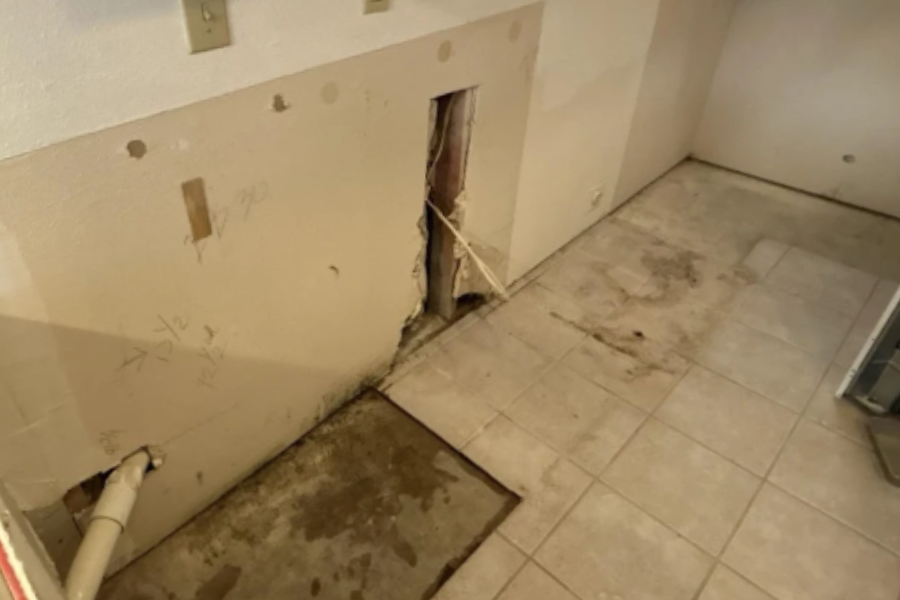
Extensive water damage like this requires immediate evacuation due to structural safety concerns and contamination risks.
Major Mold Growth
If mold has already taken hold throughout multiple rooms, especially if anyone in your household has respiratory issues or compromised immune systems, temporary relocation is the smart move. The EPA provides clear guidelines on when mold exposure becomes a health concern.
When Staying Might Be Possible
Now for the scenarios where you might be able to tough it out at home. Keep in mind, even when it’s technically safe to stay, it won’t be the most comfortable few days of your life.
Localized Water Damage
If the water damage is contained to one area of your home, like a single bathroom or kitchen, you might be able to stay in unaffected rooms. However, you’ll need to consider factors like noise from equipment and limited access to certain areas.
Category 1 Water Damage
Clean water sources (like a burst pipe or water heater leak) generally pose fewer immediate health risks, making it more likely you can remain in your home during restoration.
Ready to Get Started on Your Water Damage Restoration?
Our certified team at Intensa Dry Restoration provides 24/7 emergency water damage services throughout the Dallas-Fort Worth MetroPlex.
Contact Us for Free ConsultationWhat to Expect If You Stay
Deciding to stay home during water damage restoration means accepting that life will be far from normal for several days. Here’s what you’re signing up for:
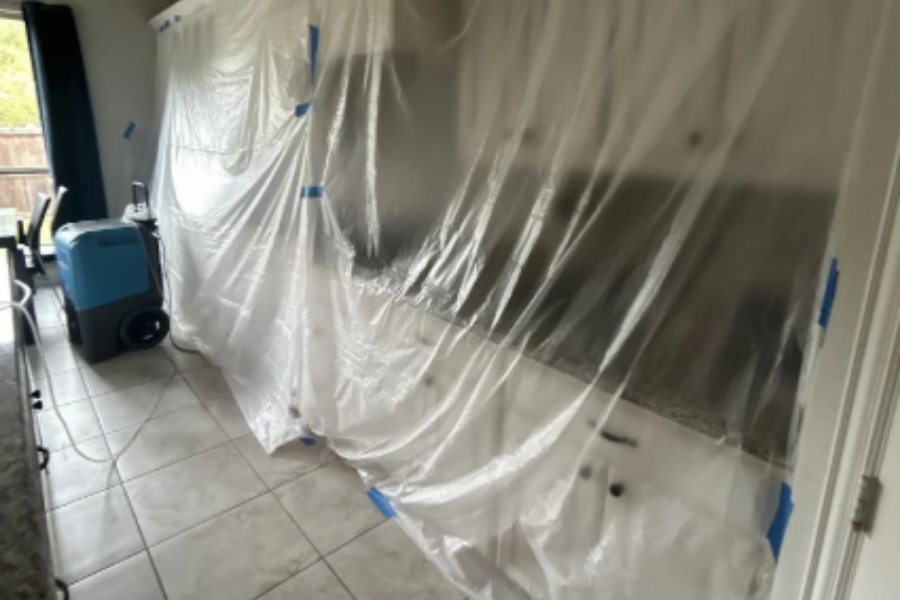
Professional containment barriers help isolate work areas, but noise and activity will still impact your daily routine throughout the restoration process.
Noise and Activity
Water damage restoration isn’t a quiet process. Industrial fans, dehumidifiers, and air movers run 24/7, creating a constant humming sound throughout your home. Add in the sound of technicians working, and you’re looking at noise levels that can make sleeping challenging.
Limited Access
Certain areas of your home will be off-limits during the restoration process. You might not be able to use your kitchen, bathroom, or other affected areas for several days.
Disrupted Utilities
Depending on the extent of the damage, you might experience temporary disruptions to electricity, water, or HVAC systems while repairs are underway.
Dust and Debris
Despite our best efforts to contain work areas, some dust and debris are inevitable during the restoration process.
Timeline Considerations for Staying Home
Understanding how long the process takes can help you decide whether staying home is realistic for your situation. Here’s a general timeline breakdown:
Water Damage Restoration Timeline
| Days | Phase | Activities |
|---|---|---|
| 1-3 | Assessment & Water Removal | Initial damage assessment, standing water extraction, moisture detection, equipment setup |
| 3-5 | Drying & Monitoring | Continuous monitoring of moisture levels, daily equipment adjustments, progress documentation |
| 5-7 | Final Drying & Prep | Equipment removal once target moisture levels reached, final testing, repair preparation |
The entire process typically takes 3-7 days, depending on the severity of damage and environmental conditions. Staying home for a weekend might be manageable, but a full week of disruption could be challenging for families with young children or anyone who needs quiet for work.
Making the Decision: Key Factors to Consider
Your Family’s Needs
Do you have infants, elderly family members, or anyone with health conditions that could be exacerbated by the restoration environment? If so, temporary relocation might be the better choice.
Work and School Requirements
If you work from home or have children doing virtual learning, the constant noise and activity might make staying home impractical.
Pet Considerations
Dogs and cats often find the restoration equipment stressful. The loud noises can cause anxiety, and curious pets might interfere with the drying process.
Available Alternative Housing
Do you have family nearby, or can you afford a hotel stay? Having good temporary housing options makes the decision easier.
Safety Checklist If You Stay
If you’ve decided staying home is the right choice, here’s what you need to do to stay safe:
Health and Safety
- ✓ Keep children and pets away from work areas
- ✓ Avoid walking on wet surfaces to prevent slips and falls
- ✓ Don’t touch electrical outlets or appliances in affected areas
- ✓ Wash hands frequently if you’ve been near damaged areas
Daily Living Adjustments
- ✓ Set up temporary sleeping arrangements away from noisy equipment
- ✓ Plan alternative meal arrangements if your kitchen is affected
- ✓ Stock up on essentials you might not be able to access easily
- ✓ Create quiet spaces for work or relaxation
Communication with Your Restoration Team
- ✓ Understand which areas are off-limits and for how long
- ✓ Know who to contact if problems arise
- ✓ Ask about daily schedules so you can plan accordingly
When Professional Advice Trumps Your Preferences
Sometimes what you want to do and what you should do are two different things. Our restoration professionals have seen it all, and when we recommend temporary relocation, it’s because we genuinely believe it’s in your best interest.
We’ve worked with families who were determined to stay home, only to realize after the first night that they’d be much more comfortable elsewhere. There’s no shame in changing your mind if the reality of staying home during restoration proves more challenging than expected.
Remember, most insurance policies cover reasonable temporary housing expenses when your home is uninhabitable due to covered damage. This isn’t just an expense, it’s an investment in your family’s comfort and safety during an already stressful time.
If you’re dealing with water damage in your Plano home, don’t wait to get professional help. Check out our guide on water damage identification in Plano properties to understand warning signs, or learn more about choosing water damage cleanup companies in Plano to ensure you’re making the best decision for your family.
Frequently Asked Questions
How long does water damage restoration typically take?
Most water damage restoration projects take 3-7 days to complete, depending on the extent of damage and environmental conditions. Simple cases with minimal affected area might be completed in 2-3 days, while extensive damage could take up to two weeks.
Will my insurance cover temporary housing if I need to relocate?
Most homeowner’s insurance policies include “loss of use” or “additional living expenses” coverage that pays for temporary housing when your home is uninhabitable due to covered damage. Contact your insurance adjuster to understand your specific coverage limits.
Can I speed up the drying process to get back to normal faster?
While you might be tempted to turn up the heat or open windows, it’s important to let the professionals manage the drying environment. Our industrial equipment and monitoring systems are specifically calibrated to dry your home safely and efficiently.
What should I do with my belongings in affected areas?
Leave everything in place until our restoration team can assess what can be saved. Moving items prematurely can spread contamination or cause additional damage. We’ll work with you to prioritize salvaging important items and help coordinate contents cleaning when necessary.
The bottom line? Whether you stay or go depends on your specific situation, but safety should always be your top priority. Our team at Intensa Dry Restoration is here to guide you through every step of the process, helping you make the best decision for your family while restoring your home with intensity and care.