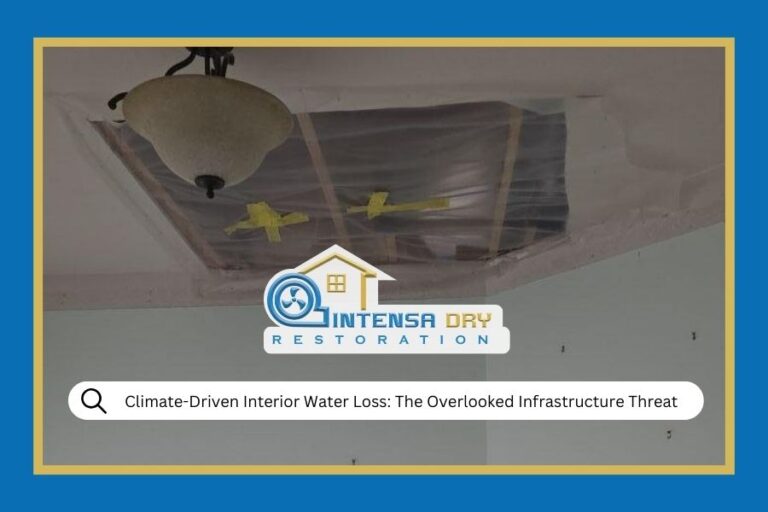
Texas isn’t supposed to freeze like that. And yet, here we are. Over the past decade, the DFW area has experienced freeze events that felt more like a Midwestern winter than a North Texas one, and the damage they leave behind tells a clear story about a system under serious stress. At Intensa Dry Mold & Water Restoration, our team responds to the aftermath of these events firsthand, and what we see isn’t just water on a floor. It’s a pattern. Climate shifts are intensifying the stresses on residential plumbing, and our water damage restoration calls spike every time temperatures drop below freezing for more than 24 hours. That’s not a coincidence. It’s infrastructure vulnerability showing itself in real time.
This isn’t a pitch. It’s a look at what’s actually driving interior water loss events, why it’s becoming a bigger problem, and what it means for homeowners, municipalities, and the broader systems that are supposed to catch us when things go wrong.
What Is Climate-Driven Interior Water Loss?
Interior water loss refers to water that escapes a home’s plumbing system from within, not flooding from rainfall or rising groundwater, but water released inside a structure due to pipe failure, fitting failure, or appliance malfunction. Climate-driven interior water loss is the subset of those events that are directly triggered or worsened by shifting climate conditions, particularly freeze-thaw cycles, heat stress on aging materials, and storm-related pressure surges.
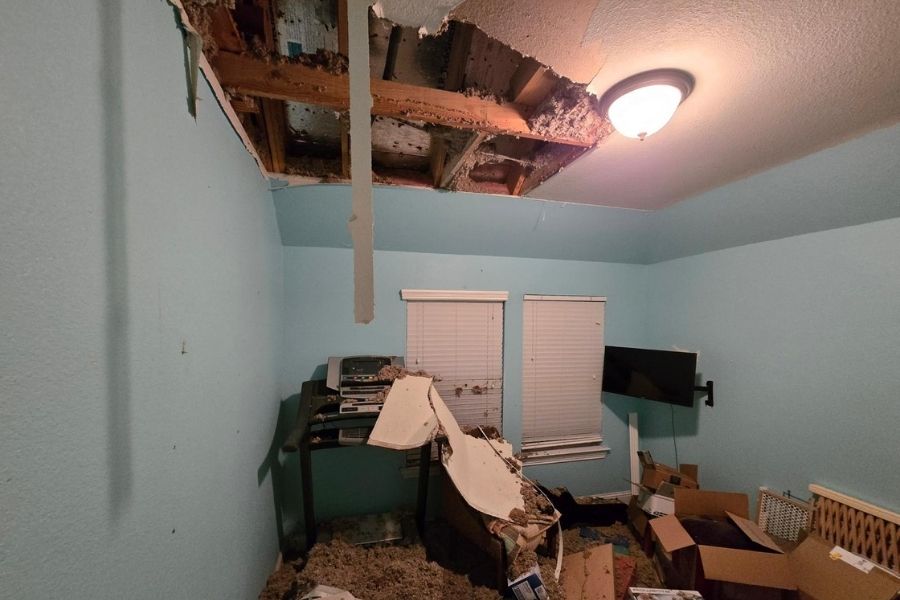
This is different from a slow drip under a sink. We’re talking about burst pipes, failed supply lines, and catastrophic appliance floods that soak walls, subfloors, and ceilings before anyone realizes something went wrong.
Dealing with water damage in Plano or the DFW area?
Our IICRC-certified team responds in under 60 minutes, 24/7. Don’t wait on water.
Freeze-Thaw Cycles and Plumbing Failure
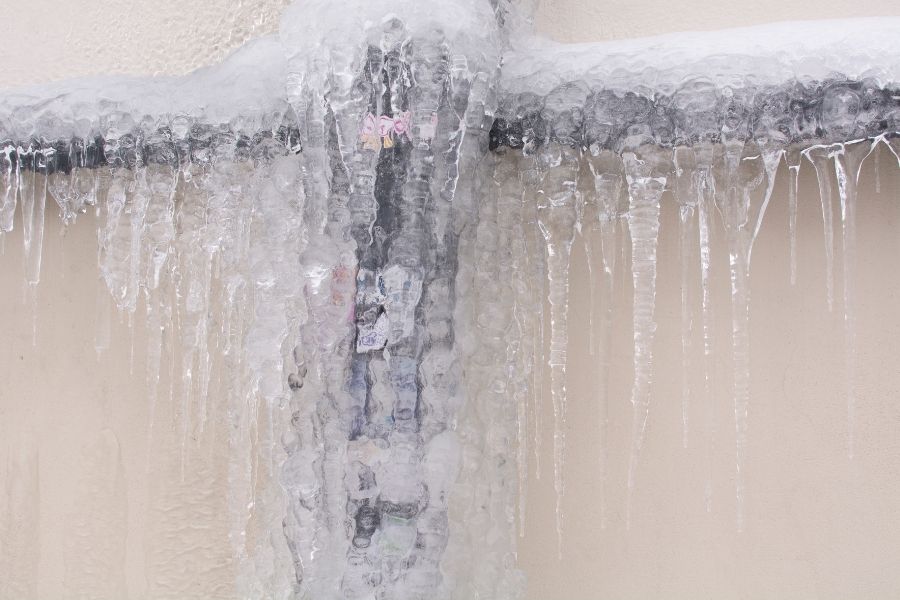
Here’s the physics, plain and simple. Water expands when it freezes. Pipes don’t. When water inside a pipe turns to ice, it creates internal pressure that the pipe material, whether copper, CPVC, or PEX, can only absorb so many times before something gives. In regions where hard freezes were historically rare, plumbing was often installed without the insulation or protection designed for those conditions.
That’s the DFW situation in a nutshell.
Climate scientists have documented an increase in what’s called “weather whiplash,” where temperatures swing dramatically over short periods. A warm week followed by a sudden hard freeze is more damaging than a slow, sustained cold spell because pipes don’t have time to acclimate. According to the EPA’s research on climate impacts to the built environment, extreme weather variability is increasingly stressing residential infrastructure in regions that weren’t historically exposed to those conditions, and the interior plumbing systems of those homes are among the most vulnerable components.
For North Texas, this isn’t theoretical. Our team documented a significant spike in frozen pipe calls during back-to-back unusual freeze events in recent years. The homes that failed weren’t old shacks. Many were relatively modern builds whose plumbing ran through exterior walls or uninsulated garage spaces with no freeze protection installed.
Aging Housing Stock: The Compounding Problem
Climate stress doesn’t hit all homes equally. It hits hardest where the infrastructure is already tired. A significant portion of the DFW housing stock, particularly in established neighborhoods of Plano, Richardson, Garland, and surrounding areas, was built during periods when plumbing materials and installation standards were very different from what we see today.
Plumbing Materials and Their Failure Points
The material inside your walls matters enormously when temperatures drop or pressure spikes. Here’s a quick breakdown of what’s common in DFW homes and how climate stress affects each:
| Pipe Material | Freeze Vulnerability | Age Concern | Notes |
|---|---|---|---|
| Copper | Moderate | Corrosion over 50+ years | Common in mid-century homes; fittings fail before pipes |
| CPVC | High | Brittleness after 25-30 years | Common in 1980s-90s construction; cracks cleanly under stress |
| PEX | Lower | Newer; long-term data limited | Flexible; can expand somewhat before failing |
| Galvanized Steel | Moderate | Interior corrosion after 40+ years | Reduced flow capacity masks pressure buildup over time |
The problem isn’t just material age in isolation. It’s that aging pipes are meeting new climate stresses they were never tested against. That combination is what drives structural damage after water intrusion in homes that look perfectly maintained from the outside.
What This Means at the Municipal Level
Individual home failures are expensive. When they happen at scale across a city during a single freeze event, the implications shift from personal inconvenience to municipal crisis. Emergency services get overwhelmed. Plumbers and restoration teams are stretched thin. Demand for materials spikes. And the secondary effects, mold growth, structural deterioration, displaced residents, create cascading costs that play out for months.
The 2021 Texas winter storm was a stark illustration of this. Hundreds of thousands of homes experienced interior pipe failures in a compressed window of time. The restoration industry, insurance adjusters, and supply chains couldn’t absorb that volume all at once. Homes sat wet for weeks. Damage that could have been mitigated in 72 hours turned into full gut-and-rebuild projects.
Federal Infrastructure Policy and the Gap
The federal Infrastructure Investment and Jobs Act (2021) directed billions toward water system modernization, but most of that funding targets municipal water supply and distribution infrastructure, not residential plumbing. The gap between public system investment and private residential system preparedness is significant, and it’s a gap that policy hasn’t fully addressed.
What would meaningful residential infrastructure policy look like? At minimum, it would involve updated building codes requiring freeze-resistant installation in historically mild-weather regions, incentives for proactive pipe replacement in aging housing stock, and standardized requirements for automatic water shutoff devices in new construction.
The Standardization Gap at a Glance
- Most U.S. residential plumbing codes were written before current climate variability patterns were documented
- Automatic water shutoff devices are required in very few jurisdictions, despite proven effectiveness
- Freeze protection installation standards vary dramatically by state and municipality
- No national standard currently exists for climate-adaptive residential plumbing retrofit
- Insurance loss data showing climate-correlated pipe failures is not systematically used to update building codes
How Insurance Systems Are Feeling the Pressure
Interior water damage is now one of the most common and most expensive homeowners insurance claims in the country. That’s not widely publicized, but it’s true. And as climate-driven freeze events become more frequent in regions like North Texas, insurers are responding in ways that directly affect homeowners.
Premiums are rising. Coverage exclusions are expanding. Some carriers are quietly exiting high-risk markets or tightening underwriting standards around older homes. The homeowner who doesn’t think about their plumbing until water is running down a wall is increasingly the homeowner who discovers their claim has complications they didn’t expect.
What Insurers Actually Look At
Most policies cover sudden and accidental water damage from burst pipes. What they don’t cover, and what’s increasingly disputed, is damage that results from gradual leaks, maintenance neglect, or pre-existing material failure. The distinction matters because aging pipe materials often fail in ways that look sudden but were actually building for years.
Documentation matters enormously in these situations. Knowing the age of your plumbing, its material composition, and whether you’ve taken any preventive steps can support a claim rather than complicate it. For a deeper look at how insurance intersects with water damage restoration, this piece on what insurance covers in DFW water damage situations is worth reading before you ever need to file a claim.
Prevention Technologies That Should Be Standard
The technology to dramatically reduce interior water loss already exists. It’s not experimental. It’s just not widely adopted, and there’s no consistent requirement pushing adoption. That’s the standardization gap.
Whole-Home Water Shutoff Devices
Smart water shutoff systems monitor flow rates and shut off water supply automatically when they detect anomalies, a pipe running at 3 a.m. when no one’s using water, for example. Some systems use acoustic sensors. Others use flow monitoring. The IICRC, the Institute of Inspection, Cleaning and Restoration Certification, has increasingly pointed to early detection as the single highest-impact intervention for reducing water damage severity. You can review their standards and technical resources at IICRC.org.
Pipe Insulation and Freeze Protection
For homes in North Texas, insulating pipes in unheated spaces, including attics, exterior walls, and garage areas, is one of the most cost-effective investments available. It’s not glamorous. But it works. Heat tape on vulnerable supply lines adds another layer of protection during sustained cold spells.
Thermal Imaging Inspections
Professional thermal imaging for water damage detection can identify cold spots in walls that indicate poor insulation around pipes, as well as existing moisture intrusion that’s invisible to the naked eye. Catching either problem before a freeze event can prevent a much larger emergency down the road.
What Homeowners Can Do Right Now
System-level policy change is slow. Homeowners don’t have to wait for it. There are concrete steps that reduce vulnerability significantly, and none of them require a major renovation.
A Pre-Freeze Checklist for DFW Homes
- ✓ Locate and test your main water shutoff valve. Know where it is before you need it.
- ✓ Insulate pipes in unheated spaces: attics, garages, crawl spaces, and exterior walls.
- ✓ Disconnect and drain outdoor hoses and irrigation lines before freezes.
- ✓ Install heat tape on pipes in the highest-risk areas (under cabinets on exterior walls).
- ✓ Keep cabinet doors under sinks open during sustained cold to allow warm air circulation.
- ✓ Set thermostats no lower than 55°F if you’re leaving home during a cold snap.
- ✓ Consider a whole-home water shutoff sensor if your home has older plumbing or you travel frequently.
- ✓ Know the age and material of your home’s plumbing, especially if it was built before 2000.
If a freeze does cause a pipe failure, speed matters more than almost anything else. The difference between a cleanup job and a full reconstruction project is often measured in hours. If water is running inside your walls or ceiling, shut off the main supply and call for help immediately. Our team at Intensa Dry Mold & Water Restoration covers Plano and surrounding DFW communities with under-60-minute emergency response, around the clock.
For a broader look at what the restoration process actually involves, this guide on the four phases of professional water damage restoration walks through exactly what to expect.
Frequently Asked Questions
Why are freeze-related pipe failures increasing in DFW if the climate is generally warming?
Climate warming doesn’t mean uniform temperature increases everywhere. It increases weather variability, including more extreme swings between warm and cold periods. DFW is experiencing more frequent and unpredictable hard freeze events, even as average annual temperatures rise. Residential plumbing in this region was largely built for a milder baseline, making sudden extreme cold especially damaging.
Does homeowners insurance in Texas typically cover burst pipe damage from freezing?
Most standard homeowners policies in Texas cover sudden and accidental damage from frozen pipes, including the resulting water damage. However, coverage can be disputed if the insurer determines the damage resulted from neglect. Reviewing your policy details and keeping records of preventive measures helps protect your claim.
What is the biggest risk factor for interior water damage in older DFW homes?
CPVC piping installed in homes built between roughly 1975 and 2000 is one of the highest-risk factors. CPVC becomes brittle over time and is prone to catastrophic failure under freeze-thaw stress. Homes with this material and no pipe insulation in exterior walls or unheated spaces are particularly vulnerable.
How long does it take for water damage to become a structural problem after a pipe burst?
Structural concerns begin within 24-72 hours. Wood framing absorbs moisture quickly, and drywall can lose integrity in the same window. Mold growth can begin within 24-48 hours under the right conditions. The faster extraction and drying begins, the more likely the damage stays contained to surface materials rather than spreading to framing and subfloor systems.